Buy vs. Build: Which Kind of Entrepreneur Are You?
Let’s start with the baseline.
The traditional corporate career offers a highly rational risk reward profile. It provides structured advancement, predictable compounding, and a buffer against catastrophic failure. For a specific type of high performer, it is exactly the right fit.
But if you are reading this, you have likely realised that path does not resonate with you. Maybe you are an MBA who has done the consulting stint, a finance professional who has spent enough time building extremely detailed models in Excel, or an operator who looked at the next thirty years of middle management and realised that predictability feels more like a ceiling than a safety net.
The alternative is entrepreneurship. Whether you are building from scratch or buying an existing company, the fundamental pitch is the same. You get structural autonomy, true ownership of the outcome, and the unmediated ability to affect change. You want to own the machine rather than just pull a lever inside it.
That impulse is clear, but it is only the starting line. The defining question that will dictate your daily reality, your probability of success, and the specific type of stress you take on is what you do next.
The Fork in the Road
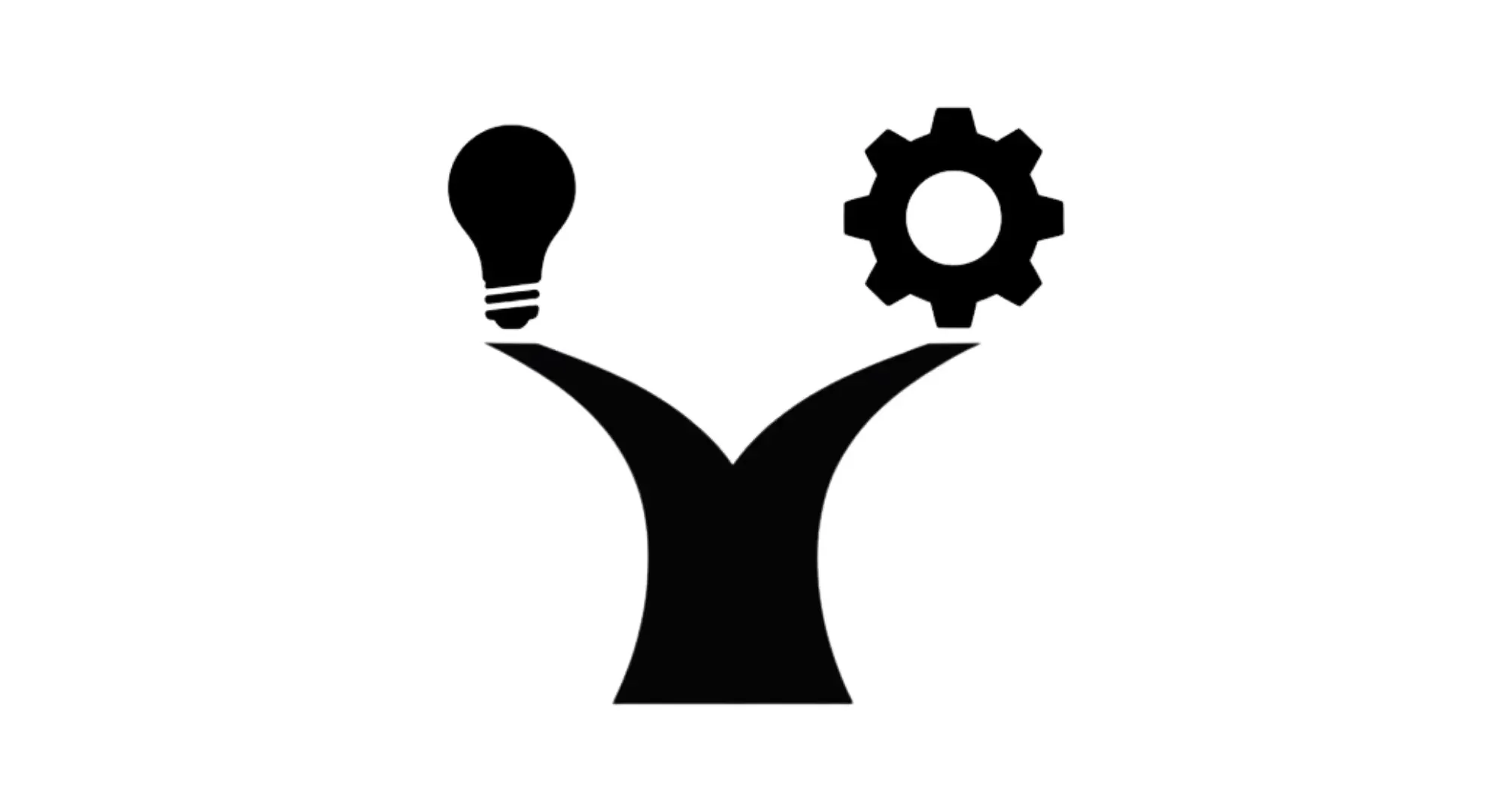
Culturally, the loudest version of entrepreneurship is the startup. For much of the business world, this zero to one path is the default model.
In a startup, your fundamental bet is that the world should look different in the future than it does today. You are challenging the status quo. Your job is to invent a new reality, fight your way to product market fit, and build enough momentum before your capital runs out.
But as you likely know if you are exploring this space, there is a second path. Entrepreneurship through acquisition (ETA) is the one to X model.
Instead of starting from scratch, ETA involves raising capital to acquire an existing privately held business and stepping in as CEO. Here your fundamental bet is that a proven, enduringly profitable machine will simply keep working. You are stepping into an ecosystem of existing cash flows, paying customers, and tenured employees. Your primary job is not to invent a product. It is to professionalise a business. You are typically transitioning a founder-centric company into a process-centric one.
At their core, these two paths share the same entrepreneurial DNA. Both put you in the CEO chair, give you true ownership of the outcome, and guarantee a steep learning curve. But while the emotional weight and the ultimate destination are largely the same, the specific risks you take on to get there are fundamentally different.
Different Flavors of Risk
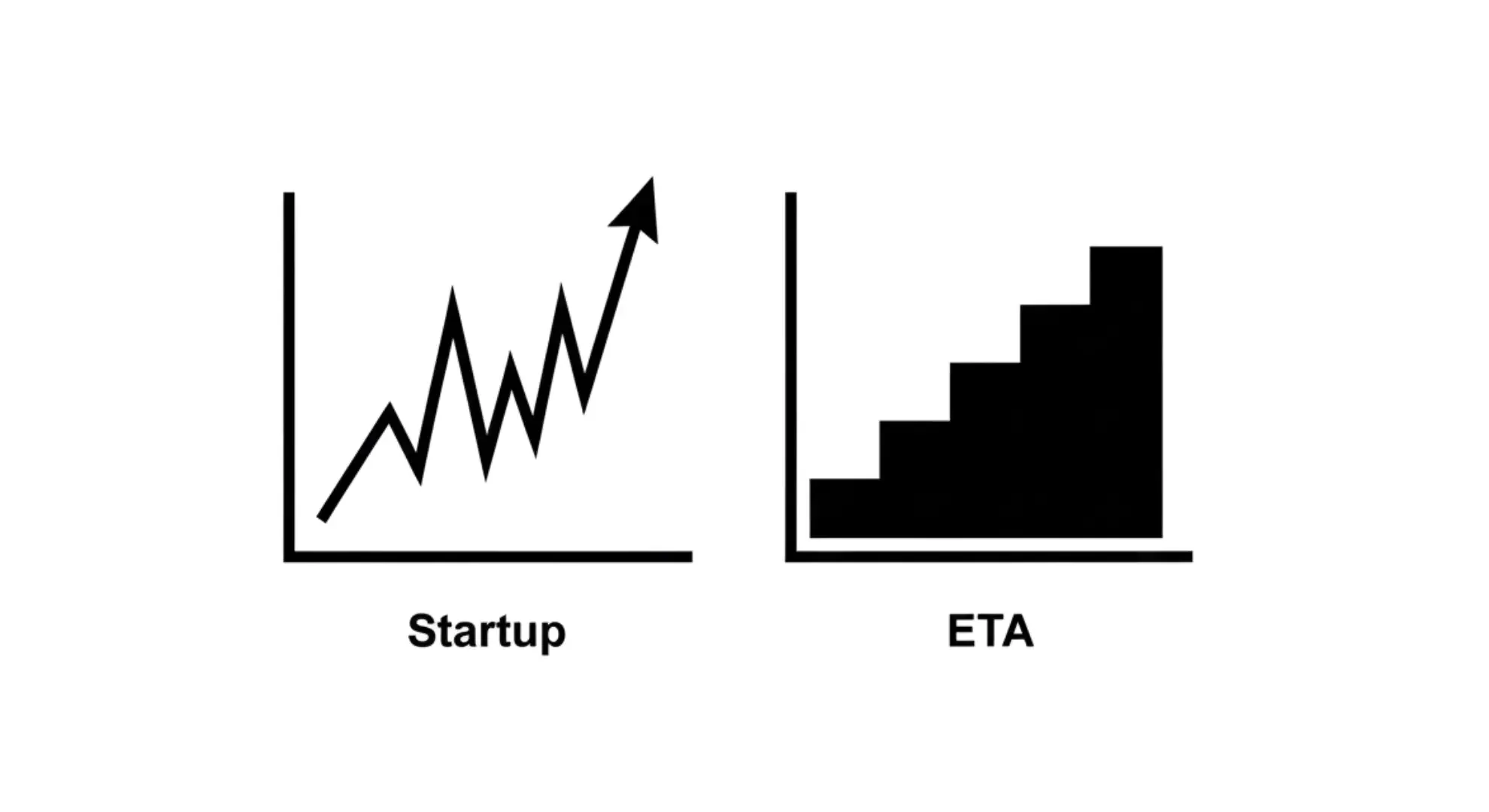
Because ETA involves buying an existing cash flowing business, it involves less risk than starting from scratch. The binary failure rates for search funds are lower than those of early stage startups. But moving down the risk curve does not mean the path is riskless. What changes is the nature of the pressure you face.
With a startup, you are absorbing market risk. You are asking a binary question about whether the company will exist in two years. You are racing against a burn rate to prove that a customer base actually wants what you are building. The primary risk is that you build a brilliant solution for a problem nobody is willing to pay to solve.
In ETA, that specific market risk is largely removed. You are buying a business that is already enduringly profitable. Customers are paying, the product works, and the unit economics are proven.
What you take on instead is execution risk. And in the context of ETA, execution risk does not just mean keeping the engine running. It means stepping into a business where the institutional knowledge is often trapped entirely in the retiring founder's head and successfully transitioning the company into a scalable, process-driven organization.
Can you institutionalize a founder-led sales process? Can you implement a new ERP system without grinding daily operations to a halt? Can you earn the respect of a workforce that has been doing this for twenty years?
While it is true that ETA offers a lower absolute risk of failure, optimizing your career around that metric alone is a mistake. The real question is which flavor of risk you are psychologically and professionally equipped to manage.
Who Fits Where

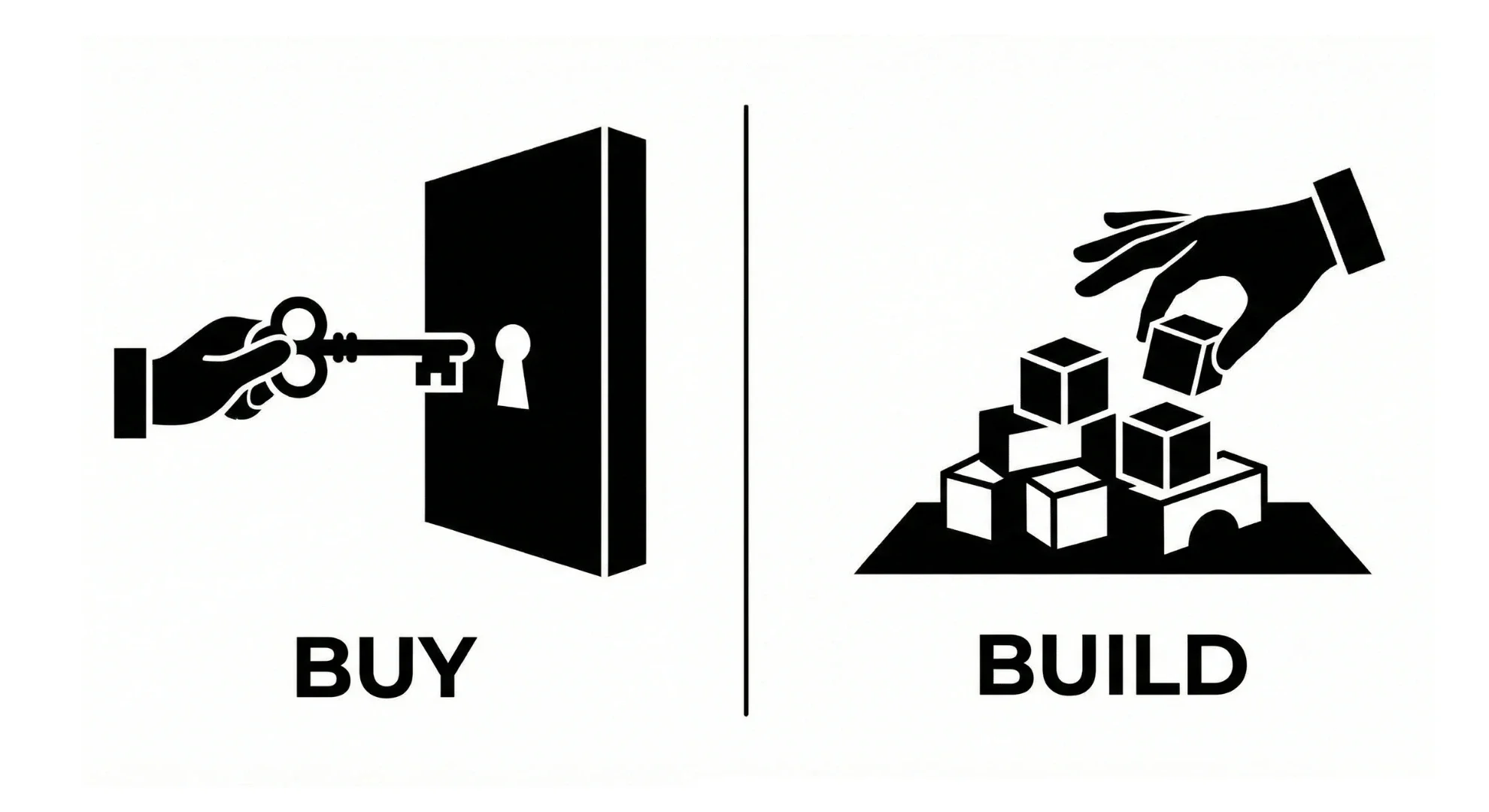
This is the part of the conversation that often gets overlooked. The decision between building and buying is not strictly binary. Many talented operators possess the grit and intellect to succeed in either arena. But the day to day nature of the work is different, and aligning your choice with your natural temperament will influence how much you actually enjoy the journey.
The startup path tends to attract the visionary. It is the natural fit if you have a hypothesis about the world that you cannot stop thinking about. Your highest and best use is thriving in the zero to one ambiguity of a small team, building entirely from scratch. Startup founders are in some fundamental way artists of invention. They want to create the future, and they need a shot at a massive, industry defining outcome to justify the sacrifice.
ETA leans into a different psychology. It attracts the pragmatic optimiser.
Maybe you do not have a burning idea for a new product, but your skill set lies in scaling an existing platform, professionalising complex operations, and leading teams through transition. You look at the mechanics of the market and conclude that you would rather compete on execution than on market timing.
More importantly, the ETA profile embraces the fact that in this asset class, dull is beautiful. While startup founders are building toward the front page of Forbes, searchers are looking for enduringly profitable, frequently unsexy businesses. Think niche manufacturing, B2B software, or commercial HVAC maintenance. They find the beauty in recurring revenue, high switching costs, and fragmented competition.
This path requires stewards. It demands high operational competence paired with a very specific type of humility. You need the emotional intelligence to walk into a business that someone else spent thirty years building, sit across from the retiring founder, and express a genuine desire to learn how their machine works.
Neither profile is inherently superior, and the economy certainly needs both to function. But while you might be capable of walking either path, taking the time to understand which environment will energise you and which will grind you down is a crucial step before you commit.
The Financial Picture
The financial mechanics of the two paths naturally reflect their underlying risk profiles. While both offer the potential for life changing equity upside, it is worth being clear eyed about how those returns are actually generated.
Startups operate on a power law. You are playing for possibility. The financial bet is that you might build a business worth hundreds of millions of dollars. The probability of reaching that scale is low, but the magnitude of a single win is enormous.
ETA plays for probability instead. You are not trying to manufacture a unicorn. The typical base case for a successful search fund underwrites an outcome where the operator’s earned equity is valued around A$10 million, assuming investors hit their target returns. While it is unlikely to mint many billionaires, the statistical likelihood of achieving a $10-20 million outcome is structurally much higher because the foundational unit economics are already proven. You do not need a miraculous product pivot. You need steady cash flow, competent management, and time.
These differing reward structures make perfect sense when you map them back to the nature of the work. The massive, uncapped upside of a startup compensates for the extreme market risk of trying to invent the future. The more bounded, highly probable upside of ETA compensates for the execution risk of professionalising the present.
Neither return profile is inherently better. They are simply reflections of the different flavors of risk each type of entrepreneur chooses to take.
The Pitch You Might Not Expect
If you are early in your career, deeply ambitious, and want to own the outcome of your work, you do not need to wait for a generational idea to strike. If your skill set leans more toward scaling, optimising, and leading people than it does toward inventing from scratch, ETA is a vehicle worth investigating.
In this model, you acquire an existing business where the market has already validated the product. Customers are paying, employees know their jobs, and cash flows are positive. Your mandate is to be the leader that the business needs for its next phase of growth. You are the one who can transition it from a successful founder-led shop into a scalable, enduring enterprise.
Speak to anyone who has actually sat in the CEO chair and they will tell you the same thing. Running a small to medium business is an all consuming endeavor. But it is a structurally proven way to capture the core benefits that likely attracted you to entrepreneurship in the first place. You gain the autonomy, the ownership, and the ability to build something meaningful on your own terms, without having to invent the wheel first.
Choose Your Hard
Ultimately, both paths are hard.
Startups are hard because you might pour years of your life into building something that the market simply does not want. ETA is hard because you are inheriting someone else’s life’s work. You carry the immediate weight of making payroll and honoring a legacy, all while tasked with transitioning a highly personalised, founder dependent business into a professionalised, growing enterprise without breaking the culture.
The question you need to answer isn't which path is easier, because neither is.
The question is which kind of hard best aligns with the way you are wired.
If you are compelled to invent the future and have the stomach for binary market risk, the zero-to-one path is likely where you belong. But if you find satisfaction in stewardship, process, and the quiet beauty of a compounding, profitable business, the one-to-X path might be exactly what you are looking for.
If you are still undecided, take the time to figure it out. The entrepreneurs who struggle most aren't the ones who pick the harder path. They are the ones who pick the wrong one for their temperament. Be brutally honest about what actually drives you, and choose your hard.
