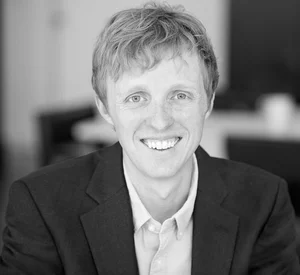
Podcast: BNI & Griswold Home Care: Graham Weihmiller
From SMEVentures, it’s The Search Fund Podcast, a show about hungry entrepreneurs who, instead of starting a business, decide to buy one. These are their stories of success, failure, and the lessons they’ve learned.
Graham Weihmiller's journey from Six Sigma black belt to acquiring Griswold Home Care during the Great Recession exemplifies resilience and strategic leadership. He shares his evolution through franchising, scaling Griswold from 100 to 250 locations, and later steering BNI—a global networking organization with 350,000+ members across 77 countries—through one of business history's most dramatic pivots during the COVID-19 pandemic. This episode unpacks the art of founder transitions, the undervalued potential of franchising in ETA, and why your family are your first customers.


This transcript is auto-generated, so please forgive any errors.
–
[00:00:00] Graham: We had one of these world leading epidemiologists on the line for one of our regular calls. And I'll never forget him saying, listen, here's what's gonna happen. The whole world's gonna shut down. Millions of people are gonna die and the economies are gonna stop, and there's gonna be this race to figure out vaccines that can help with this particular condition. And I remember going to meet with a board member right away saying, look, I don't know, but this looks like it's gonna happen. And I remember he appropriately, as any of us would at that point, looked at me and said, Graham, are you all right?
[00:00:43] Jake: Imagine you're the CEO of a company whose entire business model relies on in-person meetings. Then almost overnight the entire world locks down. That's the crisis Graham Weihmiller faced at BNI, a global networking giant with over 350,000 members across 77 countries.
Welcome to the Search Fund podcast. Today, we're talking not just about crisis management, we're talking about professional evolution. Graham takes us from his childhood where financial distress meant not being able to fix the family plumbing, to becoming a Six Sigma black belt and eventually acquiring Griswold Home Care during the great recession.
If you're a searcher navigating a tricky relationship with a seller, you need to hear Graham's three bucket framework for Founder Transitions. It's hands down one of the most practical tools we've featured on this show. We also discuss why franchising is often undervalued in the search community and how to survive the Ironman of the CEO seat without burning out.
This is a masterclass in scaling with heart. Let's get into it.
[00:01:53] Jake: Graham, thank you so much for joining me today. Really eager to get into your story. You have a couple of unique features about your journey and I hope we can do it justice today.
[00:02:05] Graham: Great to be with you, Jake. Thanks so much for having me. I appreciate what you're doing here to help share learnings across this part of the business world. So thanks for having me.
[00:02:14] Jake: Graham, looking at your bio and your background, you have a really interesting blend of corporate discipline and entrepreneurial grit in that background. And I want to rewind the tape to the beginning, the very beginning. Where did you grow up and looking back, were there early signs in your childhood that you were cut out for the standard employee path?
[00:02:38] Graham: Thanks very much. So I grew up in Northern Virginia in the US and loved entrepreneurship from an early age. Probably like a fair amount of kids, I ended up selling tomatoes and lettuce from my front yard, just because I enjoyed the interaction with customers. And so that continued into paper route and various other things, including a small moving company, like a home moving company, that I put together with some other football players. And so I really enjoyed the process of thinking about different needs in the community, finding ways to address those needs.
I don't mind sharing that growing up, I grew up in an amazing family, terrifically supportive. But we went for an extended period with some financial distress and there were points where we couldn't fill up the car with gas, we couldn't fix our plumbing. So having some financial distress was also part of my upbringing. I didn't think about it at the time—I had a great childhood. But I did see the effect it had on my parents; they felt stress as a result. And so I love entrepreneurship myself, but I also have an interest in helping others find opportunities in entrepreneurship and owning their own business. And so that also has kind of weaved through my career.
[00:04:09] Jake: Wonderful. The tomatoes and lettuce, did they come from a family farm, or where did they come from?
[00:04:15] Graham: That came from our garden. Where we lived, we had a decent sized garden. So mostly my father's skill there, certainly not mine, but that's where they came from.
[00:04:24] Jake: Beautiful. You attended William and Mary and then later HBS. And between those, you spent a bit of time in corporate finance at Bank of America and Merrill Lynch. A lot of starter searchers start in finance, but feel a bit trapped in that environment. What did you see or feel during those early corporate years that made you realize that you need to be the one making decisions?
[00:04:47] Graham: Although I worked in financial institutions, I wasn't actually so much in the finance function. So my first role at Merrill Lynch was kind of rotational, but where I settled in was institutional equity technology sales. In other words, bringing technology companies at the time public. And so I had a chance to see a lot of the emerging models. This goes back to the late nineties when a lot of the original e-commerce models were coming to market. So I was fascinated with how this relatively new technology at the time was being applied to solve customer and business needs in a new way. And just that design thinking was something that really interested me and continues to interest me to this day. So that also gave me a sense for how do you present the value proposition for a business.
And then separately at Bank of America, I was really involved in process improvement and operations. And I did that for a number of departments, initially with merchant services, which is like the credit card processing. And there I helped enhance the effectiveness of a large field sales force. And then I had a chance to do that across a number of business lines in the commercial bank and then to go to New York to help commercial bank and the investment bank work more closely together. And in that process I ended up learning about Six Sigma and became a Six Sigma black belt. So it was very operational and I learned a lot.
[00:06:19] Jake: And the way you talk about that makes me think you actually enjoyed that time.
[00:06:24] Graham: I did. Each of those experiences, I learned a lot. I had a chance to work with great people. I feel like I took something, or a number of things, from each that I then have ended up using in different adventures subsequently to that.
[00:06:36] Jake: So when was the moment, was it during that period, or was it during your time at HBS when you thought, I want to be in the CEO seat?
[00:06:45] Graham: The first slot, in the dot-com timeframe, I actually left Merrill Lynch to start an e-commerce company. And it was focused on the intersection of technology and higher education. It had a number of iterations, but we made progress, did some good things, but eventually the capital markets went the other direction. I learned a lot from that experience. I enjoyed building a team, leading a team.
And I remember coming out of that, eventually we sold it—I'd say more accurately, pretty much gave it away given the capital markets at the time. But we did our best to be transparent with investors and to keep them up to date. And I think they appreciated how hard we were working to try to create value and to do it in the right way. In fact, some of those investors I have now worked with ever since then. So even though it was at that point, for most intents and purposes, a loss on their investment, I've been able to make up their investment subsequently.
And that's something that I share just because for anyone listening, as you're building relationships with investors, I would encourage you to forge deep relationships, friendships, to think about those as lifelong relationships, as opposed to them just investing in one opportunity or another.
Then I went to business school. I went backpacking actually before that for six or seven months, which was amazing and I had a chance to see different parts of the world. But when I was back at HBS, that was my first exposure to this thing called a search fund, and it really resonated. I felt pretty good that I could work hard and execute. And it excited me to work with an existing business that had some track record and to try to improve that business. And that really appealed to me versus necessarily needing to find a completely new mousetrap and commercializing it.
So the search fund model appealed to me. At that point there were very few people in the search fund community. I think three or four maybe would come out each year from HBS and maybe an equivalent amount from Stanford. And maybe there were others doing it, but it was just a very small community.
But I flew around the country, in some cases drove across the country because I was pretty resource constrained. I met with a lot of searchers that had done the search fund model before. They were all universally exceptionally generous with their time and their insights. And I think that's one thing that's continued today in terms of the culture of the search fund community and people giving back of their experiences.
And then I determined I wanted to do it when I was coming out of business school. I had a pretty upside down balance sheet personally, so that's when I went to work at Bank of America and had, I think, four great years there. And my message there is for those considering doing a search, you can do it at any point in your career. You don't necessarily need to do it right out of business school. In fact, I think in a lot of cases there's advantages to doing it maybe a little bit later. But yeah, that's a little bit of the path.
[00:10:04] Jake: Perfect. Let's talk about your first acquisition. So don't know if you saw any hints when you were in your final days at Bank of America in 2007 of what was coming, but the GFC hit in the middle of your search and you acquired Griswold Home Care in 2009. How did you find it?
[00:10:28] Graham: Yeah, we'll talk about the great financial crisis. It has an interesting intersection with my fundraising for that particular opportunity.
I started out the search in 2007. I had a focus on franchising. With my background in Six Sigma, I really appreciated trying to take multi-unit businesses and have them be more consistent in terms of their performance, and that whole process, both statistically and process wise, is still interesting to me today. But I went out and did a lot of the things that searchers did at that point, from going to conferences to the email blasts and the mailings and all the things that you do. Eventually I was introduced to that opportunity through an intermediary.
And if we have time, I'd love to share my sense for the pros and the cons of working through intermediaries versus self-sourcing.
[00:11:30] Jake: Go for it.
[00:11:33] Graham: I know this can be sort of a controversial point. I think some investors today, and always, have this idea that searchers are gonna go out and solely focus on self-sourced deals. And I would say at least at this point in time, businesses of any magnitude are generally gonna be represented.
It's true that you can self-source deals today, but the benefit of working with a represented opportunity is that the seller is usually qualified. They're really looking to transition their business. One of the questions that I would commonly ask intermediaries when I was first talking with them was whether or not the seller had paid a retainer upfront to get the intermediary to work with them, because it would be an indication to me that the seller was serious about conducting a transaction.
Because as a searcher, as we all know, you have limited time and limited resources. You might be able to have one or two transactions fall apart because the seller backs away, but you probably can't have three or four and have enough resources to continue your search. So each one really matters. And so making sure that the seller is really a seller is key. And I think an intermediary does a lot to help with that.
Of course they also organize the information and they serve as an important facilitator of negotiations and they keep the seller grounded on what are realistic terms and what's a realistic valuation. All those things are really important.
And so I guess the punchline of what I'm saying is my approach, at least at that time, was to work through intermediaries and to be in touch with intermediaries and to be okay with the idea that it may not be an off-market bid—that I might be paying a market price in some cases, maybe paying a tad more than a market price if I really had high conviction about that business.
I think the message here that I'd share with folks listening is, at least in my experience, what has worked is finding a really good opportunity and getting into the driver's seat. Whether it's plus or minus a little bit at the time of originally buying it is almost irrelevant. And when you look at the math, that's in fact the case. The key is getting a passionate entrepreneur into a good opportunity, and generally speaking, they will create a lot of value.
And so I talk to a fair amount of searchers these days and over the years, and they get hung up on whether something is a quarter turn or a half turn more than it should be. And I always bring them back to: Hey, is this the business that you're passionate about? Do you have really high conviction? Is it a good model for you to be in? Okay, then how do we make that happen? That's the equation I think is important to keep in mind.
[00:14:35] Jake: Fantastic. Thanks. In the search world, another thing we talk about a lot is predictable or recurring revenue. You chose a franchise model, I believe. And I assume you're a proponent of that for ETA entrepreneurs. Can you talk a little bit about that and hypothesize why more ETA entrepreneurs aren't looking at franchisers?
[00:15:00] Graham: So first of all, I am a fan of recurring revenue models. They come in many shapes and sizes. And so I do think, generally speaking, that's important. One thing that is sometimes said about recurring revenue models is that you're creating a relationship versus creating a transaction. And I think that's a really important way of looking at it. And I think that's a lot of how products and services are bought today—more of a relationship versus a transaction. So I generally like that philosophy.
In terms of franchising in particular, I am passionate about franchising. I've been involved, let's see, for I guess over 20 years. One of my first jobs that we didn't touch on, but I think was somewhat relevant—I worked at Baskin-Robbins really early in my tenure. And so I had a chance at that point to sort of understand a little bit about the life of a franchisee and some of the challenges, but also the good things.
Back to what I mentioned earlier, I really like looking at multi-unit businesses and how do you identify the key things that are helping the high performers exceed, and how do you help others reach that level? And I like the team sport nature of franchising, where it really is a community and you build these lifelong relationships, these friendships, you get to know people's families. So I think there's a lot to like about franchising in particular.
Now in the franchising ecosystem, there's three principal participants: franchisors, franchisees, and suppliers. They're all different in terms of how they support the ecosystem, but that's the ecosystem of the franchising world. And most of my career has been focused on the franchisor side—how do you improve the systems, the training, all the things that help franchisees be successful. But there are great opportunities for thoughtful entrepreneurs in each of those three legs of the stool.
And I think what has happened maybe over the last 20 or 30 years is, for a lot of that time, maybe certain financial investors have not understood franchising. They may have heard some things that are not great about it. But then more recently they've understood that, wait a minute, it has some of the dynamics that they're looking for in businesses.
I guess my word of caution for folks that are new to franchising is there's different approaches to getting involved in franchising. If you're getting involved on the franchisee side, your predominant role is to execute the model with perfection that the franchisor has developed. And it is good to also be offering ideas and insights to the franchisor. And the franchisor should want those and should really consider those. But your primary role as franchisee is to execute the model that the franchisor gives you.
On the franchisor side, your primary role is to make sure that franchisees are successful. And that's an important distinction. And it really, when it works best, it works as a servant leadership model where the franchisor really is at the bottom of the org chart and the customers and the franchisees are at the top.
[00:18:19] Jake: From what I've seen, franchisors tend to trade at higher valuations than are maybe typical for search fund acquired businesses. Is your position that they're worth a bit more?
[00:18:33] Graham: The answer is, it depends. What I have seen recently, and this is common with any kind of investing, I do feel like I get a fair amount of calls these days from professional investors asking for my take on this or that, and I get the pretty strong sense that some investors are saying, "Hey, that's a franchise business. Maybe it's a franchisor, that means it's good."
And I'm like, no, no, no. Just like anything, there's good opportunities and then there's other opportunities. So one has to be discerning. For well-run franchisors with the right culture and the right unit level economic model for franchisees, yes, they can and should have a premium over the same kind of economics coming from a company-owned chain. And that's just, we can chat why, but that's certainly the case.
[00:19:31] Jake: Interesting. Let's talk about the founder to Graham transition on Griswold. The company was named after the founder, I believe it's Jean Griswold. And you bought from the founder, correct?
[00:19:46] Graham: From the family. And I'll just say that she was really a pioneer in the non-medical home care space in the US and maybe worldwide. So it was a huge honor to have a chance to step in to support that organization.
I think what I'd highlight about that transition is the following. First of all, you mentioned the transition to me, and that's certainly the case for a new CEO coming in, but it's also a new board and a new approach. And so I learned a lot through that process. There are certainly things I'm sure I could have done differently. I also think it was a challenging dynamic where maybe there were some differences of opinion at the time within the family about what the next phase of the organization should look like. I don't know that for sure. That's maybe a little bit of my read on it.
But I think the thing I'd highlight is that I think it's really challenging for any founder to continue in the day-to-day operations of a business. Because they started this, they have built it, and now there's gonna be different approaches, different team dynamics, routines, accountability for performance, metrics—all these things. There's gonna be just a different approach to supporting customers and franchisees.
And I've been on all sides of this kind of situation, so I have empathy for all involved. I think after having been through a number of these situations, what I would say is I think the best situation for all involved is where—again, in most cases, this isn't a blanket statement, but I'd say in most cases—I think a founder or a founding family pivots to coaching and supporting the new CEO as opposed to being involved in day-to-day operations.
I think that close proximity, if they're involved in day-to-day operations, is just too emotionally hard to see something changed, and generally for the good. That would be my advice. I talk to searchers that are considering different transition paths. And my general advice for all involved is for the founder to potentially be on the board—but we could talk about pros and cons with that—but certainly not to be involved in day-to-day operations, but to really serve as a coach.
Now, the new CEO should always edify appropriately and respect the founder. I mean, the new CEO wouldn't be in the position that they're in without the founder or the founding group having built what they built. And so I have a very special place in my heart for founders and what they do. It's an amazing personality type and work ethic that gets these businesses off the ground to a place where a new CEO can come in.
So no matter what, there should always be respect, edification, recognition for that. I guess my key point is that I would coach searchers to generally avoid a day-to-day operational role of almost any kind for founders. I just think that's hard to do for all involved.
[00:23:12] Jake: Yeah. Certainly been true from what I've seen. You had a really good run at Griswold. From what I've read, you grew it from roughly a hundred locations to over 250 locations in a pretty short time span. Is that accurate?
[00:23:31] Graham: Yeah, and I can talk about the pros and cons of growing that fast. But that sounds about right.
[00:23:36] Jake: Well, let's maybe focus in on one material fire that you encountered in that scaling process. This was, other than your startup stint, this was your first CEO role, correct?
[00:23:47] Graham: Yes, that is correct.
[00:23:48] Jake: And so first material fire as CEO—not firing a human, although it could be that—but a fire that you had to put out in that seat.
[00:23:59] Graham: There were so many. And just, it was a great organization and it was a huge honor to have a chance to play a role. What I mean is with any emerging business there's always so many opportunities to add value. A lot of times searchers ask me how am I gonna know where to add value. And I tell them, listen, there's going to be more projects than you can get involved with. The key is focusing.
And I guess that's probably what I would highlight. I remember being in the parking lot talking to one of my board members who was excellent throughout this process. And my background was in Six Sigma and process improvement. So I wanted to get out the Microsoft Visio and just process map everything and find the break points and fix them and that kind of thing.
And he straightened me out in a hurry. He said, look, your job is not to fix the processes. Your job is to get the right people in the right seats. And they will fix the processes in a much better way than you'll ever be able to. And man, was he right.
And I guess I would mention that to searchers, especially first-time searchers, just a reminder that as CEO your number one job is to make sure you have the right people on the bus. And then you can figure out over time what different roles they can play.
And certainly you want to build the right culture. All those things go together. But individually, your role is not to fix processes. Your role is to get the right people on the bus. And so your ability, your interest, your passion for recruiting, especially senior executives, is really important. And I'd suggest that's a really rewarding and fun part of being a CEO. But that's gonna be the most important thing that you do—being able to recruit and to pull people into your organization. Not for where your organization is today, but for where it's gonna be two to five years from now.
[00:26:05] Jake: It's so tempting to fix the processes though. You step in there and you see a storm everywhere. And instinct as an A-type entrepreneur is to fix. How do you avoid that? Is that how you used your board to level set you?
[00:26:17] Graham: The board helped with that, certainly. Here's something though I'd recommend, and I mention this to a lot of executives and CEOs I talk with: take an hour, take a spreadsheet out or even just a piece of paper, and quantify the value of an hour of your time.
And the way that you do that is you think about, okay, my time properly applied for an hour has this probability of making this much adjustment, let's say, in the outcome this year in terms of EBITDA or whatever. And you use a reasonable multiple and you figure out the value of an hour of your time. And I can tell you it's far higher than what you initially realize it is.
And so when you quantify that, you start to understand the opportunity cost of you as CEO sitting in your office trying to fix the problems around the company. And you quickly figure out that that model doesn't scale. In fact, it is the opposite of scaling. It really constrains the company.
And the other part about that, which I think is really important today, is burnout. This is a word that I never really understood, but it's a real thing. And what happens is it's just the balance between effort and dopamine, for lack of a better term. And that can get out of whack. And as CEO you need to maintain fresh, high energy. And so that's another reason that you need to make sure that you have the right team and that you're really delegating.
Now, I'll just say a moment on that if I could. When you get the right talent, you have to let go of what they then need to lead, because you brought them on to lead that area. And the best talent out there won't stick around if you are micromanaging them. They will do things in a different way and they will make mistakes.
Now, your job as CEO is to be in touch with them enough to make sure that they're not making mistakes that might sink the ship. But in most cases, they're gonna be modest mistakes that you might've made anyway. But the key point is when you bring on the best talent, you have to let that talent do what it's designed to do.
Now, if you bring on the wrong talent, you need to be courageous enough to make a decision to make a change quickly. And I'll say on that, despite the best screening process you have and whatever number of interviews you put them through and this, that, and the other thing, you're probably only gonna be accurate in terms of hiring about two-thirds of the time. So roughly one-third of the time, the individual may not be a fit for that particular role.
Now, in a small percentage of the time, there may be a different role on the team that makes sense, but that's only a small percentage of the time. Most of the time in those cases, there's a need to make a tough decision. And if that's the case, you want to make that decision earlier rather than later. But these are all the things that the CEO needs to focus their time on. It's getting the right talent on the bus, getting the right energy and culture going. That's how you create the engine that wins.
[00:29:41] Jake: Fantastic. We're only partway through the journey and there have been so many nuggets of wisdom here. Griswold did well as we've mentioned. How did that journey come to an end? Some searchers would've decided to stay on that bus for as long as they could. We're hearing a lot of talk about long-term hold models these days. Why did this journey end and why were you ready for the next chapter?
[00:30:07] Graham: There wasn't as much talk about long-term holds back then. So I think that's a good thing that people are talking about now. And I'm a big believer in long-term holds having all kinds of good benefits to all involved.
So in the end there, we had interest from a strategic a lot earlier than we were considering. That sort of kicked off discussion. And rather than just kind of going towards the strategic, we needed more information. And so that kind of launched a bit of a process. And that resulted in a good outcome.
And so I think that was a good thing. I was also just starting a family and my wife had and has a busy kind of job in healthcare. And so all of that coming together, the opportunity to spend a little bit of time at home and recharge—that was a good thing.
I think the message on that point for searchers is: set up the team and the structure and the process that enables you to have whatever level of balance you want and need over the long term. And I think that's the best equation. So I ran pretty hard in each of my roles, like all searchers do. But I think the increased focus on long-term participation I think is a good thing.
[00:31:39] Jake: Wonderful. I'm glad you took a bit of a break, but it doesn't seem like it was very long, looking at your background. Because you went again. Tell us about BNI—how you found it, how the search and the deal was different the second time around.
[00:31:56] Graham: Well, just on that point, I think folks in this community are probably all wired in a similar way. So you think, when you're running hard year after year and you might have this break in between those sprints, you think you're gonna just go to some warm destination for a while and just lay on the beach. And what happens is you might do that, but you'll find that a lot more quickly than you think, you'll be hungry once again for the thrill of growing and building.
So I guess what I'm saying there is it's good to get breaks, but just if you're planning for that to be something lengthy, don't be surprised if a month or two into that, you feel like you want to jump back into something exciting. It's just the nature of things.
But yeah, I ended up taking more or less a year. I was still on the board of Griswold Home Care, trying to support the transition there. And I did a little bit of consulting here and there, and I did some driving the kids around and some of those things. And that was great.
I was fortunate to be introduced to the founder of BNI, really great guy. I continue to work closely with him today. And I got to know more about the organization. I had never heard of it before. I ended up talking to roughly 50 friends and mentors and advisors, and only two of them had heard of BNI. And they loved it, like they had known about it. And the other 48 either wanted to get involved in some way with the organization once they understood what it did, or knew someone that should get involved. And that pattern has continued to today.
So it's a really unique global organization with operations in 77 countries. It is a franchised organization, and I was stepping in to help add to the infrastructure so that it could grow and continue to develop. So that part felt very familiar, but very different context being in the networking space. And so unique model.
Today over 350,000 entrepreneurs and business leaders meet in over 11,500 chapters in the countries in which we operate. So it has a lot of geographic scale. The need here was to add technology, add to the team, add to the training and the consistency of field operations. All the things that one does in that kind of situation. And yeah, it was a fantastic transition.
I think the founder in that case had not been in day-to-day operations for a year or two, and was really fantastic about becoming a mentor and a coach for me as the new CEO of this unique organization. So it was, I would say, about the best transition that I could ever hope for and continues to this day, over 10 years later.
[00:35:07] Jake: What did you do differently to make that transition better?
[00:35:11] Graham: We had a lot of discussion before I stepped into the CEO seat about roles and responsibilities. And it was very clear that I would be knee deep in operations and leading the charge there, and that his mentorship and strategic support would be very helpful, but maybe not in operations. And at this point, he did not have an interest in operations, so it was a great fit. He wanted to focus on writing books and training and speaking, and he does an amazing job at all of those things.
And so we had a clear division of responsibilities, and I think that was really key.
There's another thing, and this is really a construct that I have to give him huge credit for, and it's something that we write about in a book that we're wrapping up now. And it's this three bucket idea.
And I would encourage folks to think about this when they're working with a founder, or even if eventually they're gonna hand the business off to someone else. And that's kind of an important point in this whole process. The searchers primarily think about transitions as them coming into the seat, but eventually they will hand it off to someone else too. And I'm saying that as I'm looking at the baton in my office that I literally handed off to the new CEO of BNI, who's doing an amazing job.
But this idea of the three buckets. I won't recall the specific names of buckets, but I don't think that's hugely important. The basic concept is that the founder would provide feedback on, and I would seek his feedback on, a routine basis. And by the way, keeping that routine in place, whether it's weekly or biweekly, is really important.
And let me just say that as a new CEO, your time is gonna be stretched as thin as it can possibly be stretched. But keep the routine in place with the founder. That is out of respect and recognition, and also because you need their advice and input.
So I would share a plan of action I was thinking about regarding one thing or another and he would say, okay, well that's in the first bucket—like sometimes he would say, okay, in other words, I'm not sure that's gonna be the right way to go, but it's not a big deal either way.
The second bucket was: you really ought to think through that one before you take that action. I'm not really sure that one's gonna be successful and it could do some damage if you're wrong.
And then the third bucket was: that one really you shouldn't do. And that really presents a lot of risk.
Now to his full credit, the key in that is that he very rarely used that third bucket. Less than probably the fingers on my hand. And that was really gracious of him to allow me to try things that maybe had been tried before and didn't work, but to try them in a new way.
And that simple three bucket construct was so incredibly helpful, over a decade essentially of working closely as I at that point was CEO, and he continued in his role as founder and what we call chief visionary for the organization, and a board member, and a teammate also.
So I would encourage that three bucket construct. And the other thing I would encourage is where there might be points of difference—and there will be, because when you're leading an organization, you gotta make a lot of decisions, that's the nature of it—some of those you're just not gonna have agreement with the founder.
So first of all, if it's in that third bucket, really listen and be deferential. Because they're probably right. So don't be so full of confidence that you go against what the founder has learned over years and years.
The second point I'd make on that is if it's in the first or second bucket, maybe slow down and just do a pilot. Don't turn the whole ship 90 degrees to the right. Just do a pilot because the data will speak for itself. And oftentimes you'll find that the founder was right—like that was not a good idea. Sometimes you'll find that actually, that can work and we should expand that.
But I think test and learn is a great philosophy to have for leaders at every level.
[00:39:49] Jake: As evidence of your strong relationship with that founder, Mr. Meisner, and the mutual respect, he credits you for one of the greatest pivots he's ever seen in business during COVID. So I have to ask you about that experience running a business networking organization in a global pandemic.
[00:40:14] Graham: Well, I want to give credit to my late father here. So he was a career military officer, and he was for a long part of his career a weapons officer. And so it might be ironic that he had this huge focus on safety, but I learned that there were two reasons for that.
Number one, you have to be very careful with weapons and the military and ordinance. But also he just had a love of people and wanted them to be safe. And so safety was always inculcated into the way I thought about things—safety for those around me from an early age.
And also we used to go on these walks and we would talk about history and the world. And he would mention from time to time pandemics. And I would hear him say that, and I would think, well, that can't happen again. We have like modern medicine and there's no way that could happen again, would be my internal thought about that.
And there was a point in very early January of 2020 where I was hearing reports that some of our members were falling ill in some of our chapters in China. And I was driving home and I was curious about that. And I remember to this day where I was, exactly on the road, on my drive home when it all hit me at one time.
And I remember saying, oh my goodness, I wonder if this is one of those things that my father used to talk about.
And so we immediately went deep on this because we saw quickly that if this actually was that, this would get to the heart of our model—because 35 years at that point, we'd only done in-person group meetings once a week. And so this could in fact be on the other side of that.
So we went really deep in our own research and we hired world-renowned epidemiologists. And the interesting part about that was, first of all, my father-in-law, who is a leading researcher and doctor at Columbia University, was able to connect me to a couple epidemiologists there who were really helpful, who were in touch with ones at Harvard, Johns Hopkins, and also at a health system here in Charlotte.
And the reason that they decided to spend any time with my team was because they figured out that BNI had a unique ability to kind of get the word out because we had these business leaders in thousands of communities around the world. So that was the reason they decided to take us on as a client, if you will, at a point where they were really only consulting with governments and trying to get the world ready for what was about to come.
And I remember being in a conference room in our old office with our senior team. And we had one of these world-leading epidemiologists on the line for one of our regular calls. And I'll never forget him saying, listen, here's what's gonna happen. The whole world's gonna shut down. Millions of people are gonna die and the economies are gonna stop, and there's gonna be this race to figure out vaccines that can help with this particular condition.
And all of us, our jaws were just on the floor. Did we just hear that correctly? Is that possible?
And I remember we'd go home to our spouses and say, Hey, listen, I don't know, but this is what the experts are saying. And our spouses oftentimes thought we had just lost our marbles.
And I remember going to meet with a board member right away saying, look, I don't know, but this looks like it's gonna happen. And I remember he appropriately, as any of us would at that point, looked at me and said, Graham, are you all right? Like, are you doing okay?
[00:44:32] Jake: Literally that's what he said.
[00:44:34] Graham: Yeah, absolutely. I remember it like it was 10 minutes ago.
But here's what happened at the end of it. And I think this is the message for folks on the line—whatever your value system and upbringing and mentors and role models, there are some things that are non-negotiable.
And I remember a particular Saturday, and I think it was in early February at that point, when I sent a last email to each of the five epidemiologists that we were working with—and we developed our own models of spread and all this kind of stuff at that point—so we were, I think, we had the benefit of being ahead by six to eight weeks maybe on the general population, at least in the US.
And I said, look, here's the things I need to know and I need to know them today. And it was a Saturday afternoon. Of course they were all working given the situation. And they all came back and they answered it candidly.
And I said to myself, I don't know what's gonna happen next, but nobody is gonna get hurt if I can help it. Nothing to me is worth somebody getting hurt or certainly worse. And so I said, I don't know if this organization is gonna survive this pivot that we're about to do, but I know it's the right thing to do.
And so we immediately got to work with lots of coffee and espresso to pivot the organization to an online model. And I appreciate Dr. Meisner's words. The fact is it was a massive team effort. And it really spoke to the culture of the organization that people gave everything they could for a critical window to pivot the organization to an online model. And they didn't do it for their own benefit or for their own business if they were a franchisee or working on the corporate team. They did it because we needed to help our members, BNI members around the world, traverse this scary thing that was coming.
And I just had a chance to be at BNI's Global Convention in Sydney and I really appreciated these two BNI members that came up and really personally said, look, thank you for what your team did. It not only helped our businesses survive, but it helped us personally get through that time because as we all learned, it was more than a challenge to business. It was a challenge to our own wellbeing and sense of wellness.
So that was the real win—the businesses survive that could survive and playing a role in that, but also helping people stay connected to others and feel support. That was the win. And that's credit to the organization and to the culture.
So that's the long answer to a short question. But for those out there, you'll face different challenges. But there has to be non-negotiables that you have deep in your value system. And that starts with those that you're responsible for. And for those folks, safety and their wellbeing—that's always gotta be a non-negotiable.
[00:47:43] Jake: What an incredible story. And credit to your colleagues, but also credit to you. What an awesome accomplishment. You are an Ironman triathlete, and you often compare business to endurance sports. You mentioned burnout earlier, and that's certainly something that searchers and CEOs face on a regular basis. Any learnings that you can share with our entrepreneur listeners on how to manage your psychology and energy levels throughout the entrepreneurial journey?
[00:48:18] Graham: Listen, when you mentioned like I'm an Ironman, I want to be clear—the ones I've done, I've just sort of tripped and fallen across the finish line right before being disqualified. That's the truth.
So I would sign up for these things because it sort of forced me to make sure I stayed relatively in shape. I do think fitness is important and I would encourage anybody embarking on any entrepreneurial journey to make sure that physical fitness is a part of their day.
I just, there's no substitute for it, and I think it's best done first thing because it happens. You feel good about the day. You're awake. You can handle the stresses that come your way more easily and more calmly if you've had a good workout that morning. It's just a fact. So there's no replacement for that.
The other thing I'd mention is find a real hobby or project that has nothing to do with your business. It could be coaching your kid's soccer team. It could be being on the board of a nonprofit in your community. It doesn't matter what it is—learning an instrument—but you need something that has different ups and downs than your day to day.
If your entire life is consumed—and I'm saying this because I've done it the wrong way, so I've experienced that, and I've sometimes done it the right way—but if your entire happiness is based on the ebb and flow of your business, you just go through too many ups and downs because business, that's the way it is. So you need to diversify.
The other thing I'd say is make sure that you keep your family first. And that could be your parents if they're still with you, or spouse or significant other, certainly kids—because you don't get that time back.
Look, this journey of being a searcher and a CEO of an emerging business, it's intense by nature. That's part of the reason that you like it and you're heading down that way. But you have to have some guardrails on that. And your family systems are essential to you. And those are the folks that depend on you too. So it's not just your team and your employees and your board and your shareholders. Your first customers, if you will, are at home.
[00:50:50] Jake: So good. Graham, you've been a corporate operator, a startup entrepreneur, a searcher, CEO of two companies, board member. And now tell us about this current chapter of your journey as an investor.
[00:51:14] Graham: Listen, 10 years ago, if you would've said to me, "Hey, do you see yourself primarily focused on coaching and investing in emerging franchisors," I would've said, no, I want to go build that emerging franchisor, I want to go build that team. And I just got a lot of satisfaction from being that close to it and being right in the middle of it.
And you get to a certain point, at least in my experience—you get to a point and you really enjoy sharing both the good things that you've had a chance to be a part of, and also the mistakes that you've made along the way so that you can help others avoid them. And you get satisfaction from seeing that CEO just be more successful than they ever thought possible.
And so I wouldn't have predicted that sort of pivot, but in retrospect it makes perfect sense.
So yeah, the focus now is on investing in emerging franchisors that have a great culture and a great opportunity for franchisees and helping them avoid the potholes and really helping them accelerate and become something that is enduring and positive for customers and franchisees and for the community. That's the focus now, and it's a lot of fun and there's a lot of variety.
And so I guess the point being that for searchers: enjoy every stage. You're learning a lot more than you probably realize, and there'll be a point where you'll find different ways to give back to the search community, the community you live in, and engage with that because it's really fulfilling.
So it's a lot of fun for me now to talk with searchers and to talk with different founders and to help that transition happen smoothly. I kind of uniquely have passion around that because I understand the perspective of the founder and I want them to be happy, and I understand the perspective of the new CEO and I want them to be successful and happy.
So anyway, that's the focus now. It's been a ton of fun. We're looking at opportunities across the world and so I love having a chance to experience different cultures and see how there's a chance to take brands to different markets. So that's the focus now, and yeah, it's a lot of fun.
[00:53:39] Jake: Wonderful. Well, you're certainly the guy to do it. When you and I caught up at the Stanford conference recently, we hadn't spoken in a while, and you mentioned what you'd done with BNI and I paused for a second and I said, wait a minute. Is it BNI? Isn't that kind of a big deal? You said something witty back. But it is a global giant. You've done amazing things with that. And so many lessons to be learned from you and your experience.
If you could go back to your 2009 version of yourself, sitting in a car before walking into Griswold for the first time, what one piece of advice would you give to that 2009 version of yourself?
[00:54:25] Graham: That's a great question. I think it would amount to sort of a mid-length book maybe as opposed to one thing. But to boil it down, I would say: enjoy the journey.
I understand the personality types that are probably gonna be listening to this podcast. And I would say everything is gonna be okay. Focus on the people around you at home, at work. Support them, recognize them, support them to be the best they can be, and you will find immense and enduring fulfillment within that.
[00:55:03] Jake: Graham, thank you so much.
[00:55:06] Graham: Thank you. I appreciate it.
Jake: The image of Graham standing in a parking lot, wanting to fix processes himself, only to be told by his board member, "Your job isn't to fix the process. It's to get the right people on the bus." That right there is the searcher's dilemma in a nutshell.
I hope you took notes on that three bucket framework. It's a brilliant way to respect the founder's legacy while giving yourself the freedom to innovate.
But my biggest takeaway was Graham's definition of success. It's not just about the exit or the EBITDA. It's about recognizing that your family are your first customers. Whether you're tripping across the finish line of an Ironman or navigating a global pivot, remember to enjoy the journey.
Thanks for listening, and we'll catch you on the next episode.
The information in this podcast is for general informational and educational purposes only and does not constitute financial, legal, tax, or professional advice. Views expressed by guests are their own and do not necessarily reflect those of SMEVentures or the hosts. We may have financial interests, investment relationships, or business partnerships with some guests or their companies. Before making any acquisition or business decisions, seek advice from qualified professionals familiar with your specific circumstances.