Podcast: CTE: Stijn De Vriendt

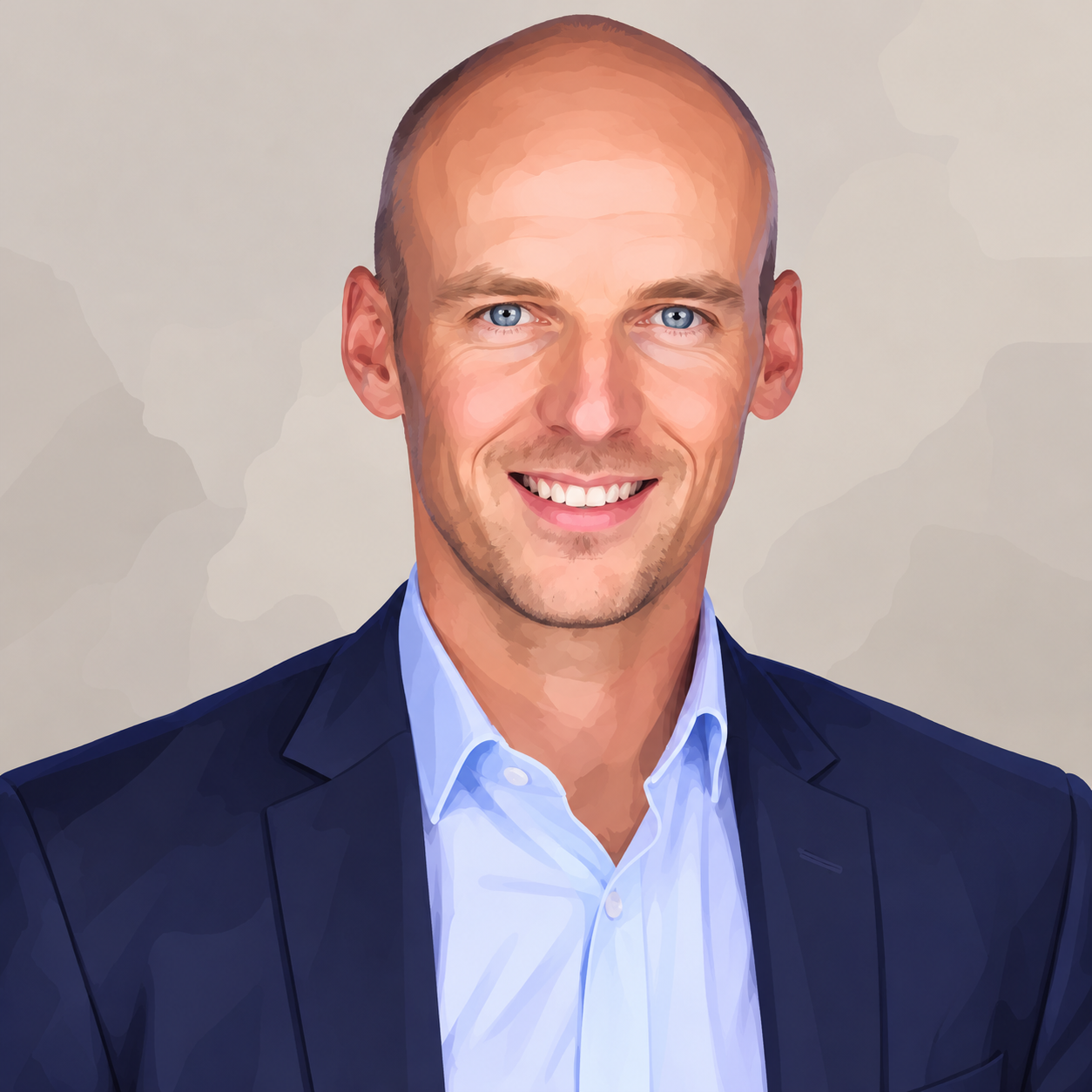
The Search Fund Podcast: Stijn De Vriendt (CTE)
From SMEVentures, it's The Search Fund Podcast, a show about hungry entrepreneurs who, instead of starting a business, decide to buy one. These are their stories of success, failure, and the lessons they've learned.
Stijn De Vriendt spent 14 years at Accenture, then built an advisory firm that guided private companies through their exits. Talking to searchers about their deals felt like holding up a mirror, so he raised a search fund in partnership with SMEVentures and bought CTE, a premium truck body and trailer manufacturer in Drouin, Victoria. He was the first buyer to see the deal, and the founder picked him over a buyer from inside the industry. This episode covers why the founder wanted a different kind of successor, why a trailer business is less capital-hungry than it looks and the staffing call Stijn wishes he'd made three months sooner.
Apple Podcasts | Spotify | Amazon Music | Buzzsprout | TuneIn
This transcript is auto-generated, so please forgive any errors.
Stijn [0:01]: We had to manage someone out that wasn't gonna keep up. And retrospectively, I feel I should have done that earlier. But at the time, you have that mindset of not coming in and making too much change, and I wanted to give people chances, but there's an opportunity cost. The person who's now in that seat has just helped to change the culture of the company significantly and is such a whirlwind of change and positivity that I'm like, "I should have done this three months ago or three months earlier."
Jake [0:29]: Stijn De Vriendt spent 14 years in consulting, a strategy director advising some of the biggest companies in the world. He now runs a trailer factory in rural Victoria, Australia.
Jake [0:42]: Welcome to The Search Fund Podcast.
Jake [0:44]: Stijn grew up in Ghent, Belgium, watching his engineer father run a company that had employed him for forty years.
Jake [0:52]: What young Stijn noticed wasn't the title. It was that the job gave his dad enough control to build a real career and still be home for dinner most nights. That was the bar Stijn then set for himself. He studied economics, joined Accenture in the middle of the GFC, and made director. A two-year transfer to Melbourne turned into the place he's called home since.
Jake [1:15]: He then built an advisory business helping smaller private companies build value and sell, and eventually found himself coaching other people through the deal of their lives, the very thing he'd never done himself
Jake [1:27]: so he did it. He raised, searched, and bought CTE, Custom Transport Equipment, a premium truck body and trailer manufacturer in Drouin, Victoria, a company that the founders had spent twenty years building. In this episode, we get into what made Stijn switch sides, the decision he wishes he'd made three months sooner, and why the founder picked him over the more obvious buyer.
Jake [1:54]: Let's get into it.
Jake [1:56]: Stijn, thank you so much for joining us today. Let's start right at the beginning. Where did you grow up? And describe home.
Stijn [2:07]: Thanks Jake, and it's great to be here today, Jake. Thanks for having me on the podcast. So home for me is Belgium a city called Ghent. It's a historic city, a university city. I was born and raised there, spent the first 20 years of my life there. I went to school there, went to university there grew up there with, with my family in sort of a suburbia leading a pretty, pretty normal middle-class upbringing, I would say
Jake [2:33]: Was there anyone around you growing up who was a business owner?
Stijn [2:39]: Yes. So I think the-- for me, the-- there was a couple of sort of threads. One so both my parents worked for let's call them SMEs, pretty local companies that were yeah, owned by families or individual entrepreneurs. My mum worked in a, a glue manufacturing company that expanded as they grew and I saw that journey, but it was mainly through my dad.
Stijn [3:04]: So my dad he's an engineer. He spent forty years working for the same company where at the end of that journey, he was basically the general manager running it. At that point, it had been acquired by a multinational, but he ran it like it was his own. So it's the the journey that he took in that business.
Stijn [3:20]: But then his boss/business partner went on to establish another business, and he did very well from that journey. So I was always pretty close to a few people that had developed either beautiful careers through the SME businesses or had built businesses themselves.
Stijn [3:36]: And what I really liked about even my dad's journey was the versatility in the job. The stories he came home with from the complexities of managing people to having to travel to deal with client issues, the yeah, big milestones for how you set up new locations and grow the business. I really liked the view that though despite it was sometimes stressful for him and for others, I think it was never the same. It didn't feel like a job where you just clock in, clock out and do what you need to do. It was very versatile
Jake [4:06]: It sounds like even in your younger life, given the way you're talking about this, it sounds like you were fairly aware of how your parents' experience in business compared to some other career paths. Would you say that's accurate? Were you conscious of that track as different from other tracks?
Stijn [4:27]: Y-yes, and it's part retrospective, right? I think now I obviously reflect on that and I see that. But again, despite my dad not being the full owner of that company, it gave him control. So he was a very present dad. We had dinner most nights all together as a family. Yet he had a challenging career and got satisfaction out of what he was doing day in, day out versus people who would, I don't know, jump on a train to get to a city to work eight hours and come back and commute.
Stijn [4:54]: He was getting, I think, more satisfaction out of that while still having control to be there in the big moments for his family. So I think it was part role model path ah, this is what a job looks like that then made me reflect as I built my own career of what mine was starting to look like and how it didn't tick all those boxes.
Stijn [5:11]: So I think, yeah, it was good to have that as the benchmark to keep myself honest as I developed my own career.
Jake [5:18]: How did you wind up in Australia?
Stijn [5:21]: So that's a sort of, yeah, a longer story that probably then it's the, the segue into my professional career. So I studied economics in, in Ghent where it's a very, it's a very socialist country, Belgium, so everyone gets a master's. So I studied a bit more abroad. And then I... Out of the economics, I felt there was two parts at that time.
Stijn [5:40]: It was either you go into consulting or you go and work for a bank. So I ended up in consulting. I worked for a large multinational global consulting firm built out my career, that first chapter in Belgium, and then the opportunity emerged, or I I think I created the opportunity.
Stijn [5:55]: I got a bit bored where I was and wanted to see more of the world, so I explored paths to to try to combine a bit of travel and work. So I ended up s-sorting out a transfer to the Melbourne office of that multinational consulting firm. And that's how I ended up in Australia, like many people, attracted by the distance of the country the beauty of the country and with a plan for a two-year stint.
Stijn [6:18]: But obviously now what is it? 12, 13 years later it's become a lot more than that. It's become home
Jake [6:26]: You have a history as a bit of an endurance athlete. Tell us about that
Stijn [6:33]: Yeah. So I grew up always playing sports. I think it's the one consistent thing throughout my life. It's from very young. I think through-- my parents were very active as well. We-- I grew up playing tennis, playing soccer and then exploring different sports.
Stijn [6:46]: And as I became like a professional and had to travel a bit more for work and had to do longer hours in the sort of the consulting world that's the thing that, that dropped. And I think at a point I didn't feel too healthy, so I was, "Okay, I need to find something that I can combine with this, this career."
Stijn [7:03]: And then wherever I travelled, you can always run in a city. You can probably find a hotel with a gym. If you're lucky, you can find a hotel with a pool. So I think through a friend, I got challenged to do a, a short distance triathlon. I'm quite a competitive person, not really to compete against others, but more with myself and there's a parallel with endurance sports and I think a professional career in that it's the effort you put in that gets you the results.
Stijn [7:28]: Building up to Ironman distance triathlons, which is ten hours of ten-hour events you need to put in a lot of work, and then things need to go right on the day to deliver the perfect performance. But some stuff will go wrong along the way. Like my first full Ironman, I crashed on the bike halfway through, and that's three years of training that goes into nothing.
Stijn [7:50]: And you can have an analogy there with like a mispromotion or something. It's shit in the moment or it's not great in the moment, but you've put in the work. So ideally if you keep doing that, then good things will come. So I always enjoyed sports both as an outlet, but I think it's, it's-- there's a lot of parallel I think, and it works well for me that you just put the hours in, you get better, and then results will come.
Stijn [8:11]: And that's how I approached my career but also now how I've approached sort of this, this search endeavour and how I look at running the business that I'm running now.
Jake [8:20]: You breezed through it really quickly, but that note about being a competitive person but not competitive with other people, more competitive with yourself, I don't think I've ever heard anyone say it quite like that before. That's interesting, so maybe we'll circle back to that in another point in the conversation.
Jake [8:36]: So you worked with Accenture for a long time. What kept you there so long?
Stijn [8:41]: Even now I think it was a great start of my career. So I joined in two thousand and eight, which was yeah, GFC, I think just hit I think three months into my journey there. A lot of the work in banking dried up, and I ended up in a project in the Netherlands, in Amsterdam, and it was just one exciting chapter after the other in the first few years.
Stijn [9:03]: I saw a lot of Europe through my travels. I spent time in Amsterdam, Paris, and London and it was all these massive transformation programs because of the GFC. It was like post-GFC consolidation in banking. We set up a completely new bank in the Netherlands out of a government carve-out of a bank.
Stijn [9:21]: So it was it was exciting work, exciting travel. It's fast-paced, good mentorship model. It was all about the stewardship, right? So I still feel like my eye for detail and my work ethic comes from those early years. And then I think I got to do it all over again when I came to Australia.
Stijn [9:38]: So I think the, the trigger to take that, that step and move here was probably at a time where I could have left and done something differently. But then getting the chance to come here in the first few years was rebuilding my network and my brand here and getting similar opportunities.
Stijn [9:54]: Then instead of being mentored, I became much more of a mentor to the, to young people, and I got to teach strategy college in the US a couple of times a year. And it was always a new opportunity to develop yourself further, both as an individual, as a leader, as an operator.
Stijn [10:09]: And it was more towards the end of that chapter when I had let's say, climbed the ladder to a level where there wasn't much more to climb other than, yeah, within that sort of final tier that I felt like it was just more hours and more politics for less control and less impact.
Stijn [10:25]: It wasn't living up to the expectations. But I think as a training school, it was exactly what I needed. I was curious to learn about business. I was curious to learn about different industries. And I think over the fourteen years I spent there, I probably did a hundred projects across, yeah, a, a dozen or more industries from heavy manufacturing, mining, to telcos, to to medical companies, to logistics companies.
Stijn [10:48]: So I've done a lot of different industries worked in a lot of different companies, different cultures for different bosses. So I think it, it shapes every one of those experiences shapes you either in how you want to operate, how you want to lead, or how you don't wanna lead, or what type of organisation you wouldn't wanna be part of.
Stijn [11:04]: The bad influences you, and the good influences you. So it's been really shaping in both the person that I've become and the, the leader I want to be for people
Jake [11:13]: In the business school sphere and the search fund sphere the consulting track is often depicted as removed, making PowerPoint decks in the headquarters and not having much opportunity to get hands-on. How long were you at Accenture?
Stijn [11:30]: 14 years in total
Jake [11:31]: years. To what degree does that depiction reflect your experience?
Stijn [11:35]: I think it's a fair point, but it's not always the case. So I think in my early years, I would've said that's probably true. You're a bit removed from the actual decision-makers, and you're working, but you're working for smart people, and it's more about the internal men-mentorship versus the actual sort of client work.
Stijn [11:52]: One caveat, I was alwa-always in strategy and operations, which is more it works at that C-suite, so it usually solves the bigger problems in organisations. So I think it is the more satisfying bit of consulting. Like I wouldn't probably wanna be part of a lot of different teams.
Stijn [12:05]: But then I think as you get more, more senior while there is-- there's a lot of politics in a lot of the larger clients, right? Like I remember a project that we did where we spent, hundred-hour weeks getting something over the line only for a reorg to happen and the sponsor of that project getting moved on to a different department and the whole initiative dying, right?
Stijn [12:24]: So it's not really satisfying to see that effort go to, to waste or end up in a drawer somewhere. It was one of the reasons why towards the end of that chapter, I decided I wanted to do more. I had the, the benefit of working with smaller clients as well while I was at Accenture, and I found those most satisfying. Like you were working with leadership teams who either were owners or were very closely managed by the owners, and it was private equity-owned, and you spoke to boards where decision got made pretty quickly.
Stijn [12:54]: So it was less political. And it was that type of work that I wanted more of, but unfortunately, that doesn't really line up with the vision of Accenture, right? Like they would want to work only for that the top hundred companies in the world, and they would prefer to have all their revenue consolidated by doing as much as they can for those largest Fortune 500-type clients versus the, just the mid-market PE-owned company is not a, a core client for Accenture.
Stijn [13:17]: While I enjoyed that work probably the most
Jake [13:22]: Then you started your own business. What was different about that experience once you were in the lead?
Stijn [13:29]: Yeah. So the, the whole the rationale of going down that path is I think I had an itch for more control, more impact maybe an, an entrepreneurial itch as well, and the closest, safest bet was probably doing what I was doing at a smaller scale. I was-- like most of my career has been, I'm not sure if you'd call it luck or just good introductions, but again, I was introduced to someone who had a bit of a private holding group, and they were looking to start a management consulting type of proposition within that.
Stijn [13:58]: So I had the good fortune to be able to just jump into that role and create something from scratch, shape the branding, shape the proposition. And the whole premise there was to work with privately owned mid-market companies that were either chasing growth or had just transacted and needed someone to come in and do that sort of day one strategy or come in a couple of years before an exit and guide towards that exit path.
Stijn [14:22]: While we didn't start out as like an M&A advisory business, it became a bit that because private companies do not need constant outside consultants in their company. It's only around those major milestones. So as soon as we discovered that I think we found a little niche where we mainly through word of mouth and personal network, we got in front of some good clients and did some really really impactful work.
Stijn [14:46]: The one thing that I also realised as I was building out that business, that it's hard to scale if you're selling yourself and a small team and advisory. You're selling hours instead of a reusable product. And this was before sort of AI had really taken off. I think now it's a bit of a disruptive space, I think.
Stijn [15:02]: But it was very much tied to me as an individual and the trusted advisor sort of proposition towards the C-suite of a private company. But it was very satisfying. Like it-- Some of these projects were two, three little stints of scope across a multi-year path, and we saw some companies that we came in, did a whole bunch of analysis, helped them execute and then helped them transact and see them grow and change hands and
Jake [15:27]: you describe one of those in a bit more detail?
Stijn [15:29]: Yeah.
Stijn [15:30]: There was one that was a, an odd sub-entity that was owned by a multinational, and I think the m-multinational understood that, and they were keen to test what it would take to carve it out and take it to market. So I partnered with a, sort of an investment bank to come in and do a, a vendor due diligence piece where we laid out sort of a twelve-month, eighteen-month roadmap to carve it out completely and do a whole bunch of short-term growth initiatives to further professionalise and get it ready for a sale campaign.
Stijn [15:59]: And then that, that sort of, yeah, was executed successfully. We supported the due diligence period. And then yeah, we worked hand in hand with sort of the leadership team on that transition. So seeing that whole process executed was quite satisfying. And I think it was a good outcome for, for everyone involved
Jake [16:16]: How did that chapter come to an end?
Stijn [16:19]: So it was again a bit of luck and a bit of timing and some really good c- introductions along the way. So as I said, it was a, a word of mouth word of mouth sort of business. And it was actually just the case study that just explained the investment banking individual who became a sponsor of us a bit in that period.
Stijn [16:37]: He was doing quite a few introduc-introductions for us and two of those were to searchers. So I think o-one of them was Greg Green, who was one of the first searchers here who was searching during that COVID period. Didn't end up acquiring, but I got to speak with him and we were potentially gonna help a bit on due diligence work which didn't really eventuate.
Stijn [16:55]: And then the second one was to Jason Hughes, who had... was looking at a similar company to the one that we supported the M&A process for. And speaking to those guys, it was like holding up a mirror. So I spoke to these guys who were young professionals, strategy, investment sort of backgrounds, who wanted more control, who were balancing ambition with family life and professional satisfaction and building up a career path.
Stijn [17:21]: A bit tired of the corporate rat race. And were taking on that challenge of going out and finding a business to run. While I was advising in that space on how to do that I didn't get the satisfaction of being the operator, right? Not... Neither was I taking the full fruits of that labour.
Stijn [17:37]: I was getting paid a a a project fee or a, or an hourly fee for helping out, not the, the benefit of the value creation. It was a light bulb moment and I took it in the back of my mind as we were still running Tightrope. But then the, the, the group entity of which Tightrope was one of the three, four businesses got acquired by a French multinational.
Stijn [17:57]: So then I had the choice to either go back and be a, a corporate individual climbing that ladder or or go and do something else. So it was the perfect timing for me to really dive into the search and the ETA space. And I decided to exit after the the acquisition of Tightrope and pursue the path of ETA
Jake [18:15]: Fantastic. So that's about when you and I started talking. Tell me about the search. What was it actually like week to week, briefly?
Stijn [18:22]: Yeah, I think it was everything I expected because I had done a bit of-- I spent probably three, four months talking to searchers, talking to people across all the different phases. So it was that perfect mix of the hard grind of cold calling and outreach to then the excitement of discovering businesses, diving headfirst, like really sort of three-week consulting project into a few hours to really go deep in an industry, deep in a company's data to try and understand is this a high quality a business while still doing the, the, the advisory bit to position myself as a trusted individual, both to investors and to business owners to say, "Hey, trust me with your life's work.
Stijn [19:01]: I will come in and not ruin it for you." I think, yeah, search for me was not too far from home. I think it was... It needs self-discipline, it needs momentum. But it... Yeah, I benefit a lot from the structure from... I did it in a part- partnered way with you and SMEVentures, so that helped a lot in, in keeping that structure and keeping the momentum.
Stijn [19:21]: I didn't really want to spend two years building out that process and spending time building up my capability and all that stuff. I wanted to get in the operator seat as soon as possible. And that's why I chose that path. For me, it was all about success. I wanted to find a good business, buy a good business, and then get that clock going on operating a good business. And I think we succeeded in that.
Jake [19:42]: I think you did. You bought a company, beautiful company that you're running today called CTE, Custom Transport Equipment. If you can rewind your memory back to the earliest conversations with the owner and would-be seller and your first visit to that company with those new eyes what did you see and what did you feel at those early touch points?
Stijn [20:06]: Yeah. And so that was very early on in my search. I think we closed the raise of the funds late January twenty twenty-five, and I think the first time I spoke to Darren, the owner or the vendor of CTE was late February. And it was part of our, I think our outreach cold calling, and he had just-- he had engaged a broker.
Stijn [20:26]: So he passed me the details of the broker. I called the broker, and he said, "Yeah, give me another two weeks. We're finalising the IM." So I was the first one to look at that deal. We then quickly facilitated a meeting. I recall that it got cancelled because Darren was occupied and rescheduled, and the owner said, "Let's not do Teams.
Stijn [20:45]: Let's let Stijn come out to the site, and we'll meet him in person." And retrospectively, Darren told me that was the first test. He wanted someone to take the effort to come out and see the business instead of a tyre kicker just jumping on a call to get a bit of information. So I sort of-- I think I passed that test.
Stijn [21:01]: I asked, I think, a lot of questions during that first call to understand more about the business, but it was great to see it in the flesh 'cause I think everyone who comes here they see and they're like, "Oh, it's bigger than I thought it would on paper and on the website and stuff." So we build, yeah, truck bodies and trailers, so you need a bit of footprint.
Stijn [21:18]: And there's-- it's a decent modern building. So it's quite impressive to walk through it, and that, that's the same feeling I had. It had a lot of analogies with the, the company that my dad ran and as it yeah, lights the medium manufacturing, bit of equipment yeah, bit of welding, bit of action happening and a good product at the end of that, that you can touch and you can see how it's used, and you can see the value and the role it plays in society.
Stijn [21:42]: So I quickly got pretty excited about the business
Jake [21:46]: For our listeners CTE just I think just posted its first couple videos to a YouTube channel, which give a pretty good feel for what the company makes and and the environment there if you wanna check it out. Tell us a little bit more about Darren h- his how he came to the business, where he was in the cycle when you met him, and what his motivations were.
Stijn [22:07]: Yeah. So Darren came from a fabrication background. He had joined a very similar business as a young apprentice welder. So he had twenty years at another company where he worked his way up from tradesman to general manager. So he had gotten deep experience in the product, in selling the product and running sort of a, a mid-sized business of that size.
Stijn [22:30]: Then he exited that business and he did what he knew to do, and he set out to build another company.
Stijn [22:36]: So he founded CTE together with his wife, Kerry, and they spent twenty years to build it up from a small five-man operation to an upper mid-market manufacturer that employs twenty-five, thirty people and is a, yeah, is a, a highly reputable player in their i- industry segment.
Stijn [22:54]: He was ticking all the boxes for that sort of search. ETA space is in that after forty years in the industry, he was quite tired. He was ready for retirement. I think he also had a bit of self-reflection that CTE had outgrown him a bit. So he was never-- he never got any formal training to be a manager or to, to lead a, a large organisation.
Stijn [23:15]: And I think what he yeah, disliked doing is where I thrive. He didn't really like managing people. He didn't like the administrative process system side of a business. He really liked his product, and he liked talking to customers and selling that product. But I think the... Yeah, at the current size, I think the problems were getting bigger for him to manage, and I think he was just, yeah, at that chapter where he had built up a very successful career, had built wealth and had a, a business that he wanted to see succeed and thrive into the future.
Stijn [23:45]: So he was looking for that legacy solution, which I was lucky to be on the other side of that because he did not want to sell to private equity. He did not want to sell to a, a competitor and get absorbed into a larger organisation. He really wanted CTE to continue to thrive because it has an excellent reputation.
Stijn [24:02]: It has a very loyal customer base. So he saw the potential it had, but he didn't really have the energy to go after that. And he yeah, rightfully so at his early sixties, I think he saw people around him getting older and making money but not being able to enjoy it. So I think he made the choice for himself that he wanted to enjoy more of life, spend time with his grandchildren, travel do the things that he had not been able to do as much as he wanted to.
Stijn [24:26]: And that's, I think, where we were a, a great fit.
Jake [24:29]: Yeah, talk a little bit more about that. How you fit his ideal image of a successor, and you said he didn't wanna sell to private equity, he didn't wanna sell to a competitor. Why not?
Stijn [24:39]: Yeah. I think he lets his intuition drive him, drive his decisions, I think in that. And I think he had a lot of good self-reflection. Like I think there was another party involved who I think would have been the more logical choice for him because it was more like him, I think.
Stijn [24:56]: Like someone from the industry who came from that manufacturing background who would probably continue to lead it as he did. But I think he saw that the business was at that sort of platform stage where it needed a different set of skills. It needed someone who could bring modern systems, who could put processes in place, hire good people, motivate them.
Stijn [25:16]: The manufacturing side of the business is well run. There's someone here who's been here fifteen years who runs production. There's really good people there, but it's more the, yeah, the business side of this company that hadn't evolved as much as the rest of the company had.
Stijn [25:29]: So I think he saw that I was a fit from that regard and he trusted me to learn quick enough about the other bits that I wouldn't ruin that legacy. But he really saw that what I could bring would be the type of capability that the business needed to really build out a sales and marketing capability to go and get in front of the right customers to really develop that next growth chapter for the business.
Stijn [25:52]: I think he had a few peers who had sold over the last few years to private equity, and I think those exits hadn't been all what they had expected it to be. So I think he was influenced a bit there to not sell to private equity, or that he would have maybe regretted that if he went down that path.
Stijn [26:08]: So I think he tried to do the right thing by the people that were here. I think he tried to really protect his legacy to make sure that every time he drives past this, this building, that he's proud of what he built and how he left it. So I think that's where I think our model, the whole ETA space, is a great solution for family-owned businesses who don't have that succession internally, that they can find someone who is the son they never had.
Jake [26:31]: Before we go further, I should give you an opportunity to tell us a little bit more about CTE and what the company does and has been doing for 20-plus years and how it fits into the market.
Stijn [26:43]: Yep. So I think the name sort of gives a bit of a hint. So we build transport equipment. I think originally a very broad range of of equipment. So truck bodies, which are trailers that are built on top of a cab chassis truck and they live together for the life of the truck.
Stijn [27:00]: And then semi-trailers that go together with a prime mover. Initially I think -- the premise was that CTE could build any-anything that you need. I think over the twenty years it had developed a bit of a, yeah, sweet spot in our core products are our tilt slides, which is for towing and heavy equipment transport.
Stijn [27:19]: So anything diggers, excavators heavy vehicles, other trucks, if you need to transport them, they would go on the back of a, a heavy truck with a nine and a half metre tray that carries fifteen tonne, or they go on semi-trailers, open design, flatbed semi-trailers drop decks, super tilts, and a variety of other designs.
Stijn [27:40]: So our-- we really the, the product range has evolved to suit the towing and transport company. And CTE can be a one-stop shop supplier of equipment to those companies. It services a wide range of sectors, whether it's mining, agriculture, logistics, energy, utilities, infrastructure companies.
Stijn [27:59]: So basically everyone who has heavy gear needs tilt slides and semi-trailers that can carry that gear, and that's what CTE does. Most of the customer base are mid-sized to larger size. We're a premium manufacturer, so highly reliable long gear that has longevity. Trailers will easily do a million kilometres and still look and feel as new.
Stijn [28:20]: So it has that promise of quality and that comes at a price which also means that there's a very high quality customer base that makes that conscious decision to buy the best gear for their operation. And that's been the success of CTE. I think we're we've had a very loyal, thriving customer base, and we've grown with that customer base.
Jake [28:40]: Beautiful. I should disclose that SMEVentures is a shareholder in CTE and I'm on the board, but I don't think I'm alone on the board in being very optimistic about the future of this business. For our listeners, they might hear your description of the company and think that sounds capital-intensive and project-based.
Jake [28:58]: How does that fit? What would be your response to that?
Stijn [29:02]: So the, the capital base or the asset heavy is probably a bit of a myth. Like it is fabrication but it's mainly bringing together parts and accessories. To build a truck body or to build a, a trailer we basically... We'll source all the equipment. There's a lot of welding, electronics, hydraulics and paints to bring it together into a finished product.
Stijn [29:22]: But yeah, the, the cash transition is pretty quick. So a, a build will take anywhere from five to, five to ten weeks, where we're putting in a bit of money to buy the parts and we invest in the labour, but then we invoice and we get paid a bit like a car. If you wanna take ownership you need to pay, so we recover that cash pretty quickly.
Stijn [29:42]: And the reoccurring or the recurring nature of the business is probably higher than a project-based business because it's-- the client base is mainly fleet owners, right? So even smaller operators with five, between five and ten trucks in my due diligence I would see them coming back, right?
Stijn [29:58]: Like even the twenty year... have twenty-year customers there who would come back for a truck every three, four years as they renewed or expanded their fleet. So I could see that pattern in customers coming back because they want that gear. They-- even some of they are pretty flexible to change OEMs on the truck but they want the CTE tray on the back.
Stijn [30:19]: So they, we had the loyalty. It wasn't because they wanted a, a Volvo or a Scania, that they were indifferent to whatever the body was. No, they started the journey with CTE and they would then source a truck. And then the opportunity with larger fleet like the we had a-- we have a couple of customers who run between, yeah, thirty and a hundred trucks.
Stijn [30:37]: So they would annually be renewing and investing in equipment. So then that even though it's it's invoiced as a project and as an individual purchase they would keep coming back year after year. And then there was a s-- a, a sort of a hidden sales channel in that a lot of the, a lot of the sales happened through truck dealerships, which is the first point of contact for a, a retail customer to go and buy a truck.
Stijn [31:00]: The truck dealership or the truck house would create finance for both truck and tray. So while it's a, a retail customer who is the end user it's the truck dealerships who are the party that we invoice and who sell on behalf of us, like they will. And it's that same branding and reputation that makes them coming back because as a truck dealer, the reputation of the body reflects straight onto the reputation of the truck.
Stijn [31:23]: So if you're selling a high quality truck, then you don't- you want that body to live up to that same reputation so that after three months they don't have to come back and complain about the body not functioning. So truck dealers will choose to partner with highly reputable bodybuilders. And that's again something that Darren had built up successfully for over twenty years.
Stijn [31:41]: So we have a lot of recurring work coming through truck dealerships across the country
Jake [31:46]: Great. Thank you. I'm gonna, I ask you to rewind again. You're coming up on a year since buying CTE and I want you to think about those first few weeks, that first month. You have a long career of being dropped into a company with a problem to solve and being tasked with quickly solving that problem, and then you're dropped into a company that you've just bought, and you're hearing at least parts of the search fund universe saying, "Don't do anything to it.
Jake [32:13]: Just don't break it for a while." How did you reconcile perhaps your consulting-born instinct to fix and change quickly and the dynamics of search fund acquisition?
Stijn [32:28]: Yeah, no, great question. And I've reflected on it a little bit now, at the mark we're at, did I move fast, too fast, too slow? And I think I was fortunate again that I didn't know much about truck body or trailer manufacturing, so I had a lot to learn. I didn't know the people. I didn't know the business.
Stijn [32:45]: I didn't know the industry. So I think where I immediately saw some opportunities to make quite drastic improvements, I had a lot to learn. So I used that transition period, like we had the seller here three months full time to learn as much as I could about the company, about the people, about the manufacturing process, about suppliers, about clients and really take that time to just observe, ask questions, start helping out and taking a few things on my plate.
Stijn [33:14]: I think Darren was pretty keen to get rid of all the operational bits and just focus on picking up the phone and selling for that transition period. So that, that was good. It was the deep end for a lot of the sort of run the business type of components. And that kept me quite busy while still learning about the business.
Stijn [33:31]: And then it was really the... I kept a list, right? Like I saw an opportunities, and I made note of what-- where I would start small thing-- small things and big things. Like I think there was a lot of opportunity for me to win the hearts and minds of the staff by doing very minimal things.
Stijn [33:46]: Like a lot of the some small things in the office and on the workshop were underinvested in. So spending a couple thousand dollars left and right would have meant high impact for the people here and would make me a likeable individual from day one. So we did that pretty quickly after Darren had stepped out.
Stijn [34:04]: And then we were always working towards a, I think it was three months in, end of April Darren and his wife had planned a five-week trip overseas, and that was gonna be the test could we run it on our own or did we need a bit of guidance, a bit more guidance, hands-on guidance from Darren.
Stijn [34:18]: And then the large project sort of kicked off. Like we transitioned away from the existing accounting platform to a, a cloud platform. I hired the first key people. The head of sales joined at that point, which was another key transition component because Darren was still quite instrumental.
Stijn [34:32]: And I felt that, again, we got lucky there with an excellent individual who came from the industry and filled a gap that I had. And then we quicked in-- moved in quick succession, I think, through a few quite significant transformation projects that have yeah, very positively, I think, impacted how we do things here and start to chip away at some growth opportunities in a challenging industry environment with the oil crisis and the global uncertainty at the moment.
Jake [34:59]: So in all, some of the more important decisions a new CEO has to make are around getting the right butts in the right seats at the right time. How would you reflect on the speed of that component specifically bringing on new people and getting the right butts in the right seats?
Stijn [35:17]: Yep. And I think the benefit was that it was I think one of the, one of the things I inherited was a pretty skeleton office crew. We knew that from due diligence that it was probably being run by a very efficient team. And then obviously we had a seller to replace, and his wife was still coming in a day a week to pay the bills and run payroll and a few other things.
Stijn [35:38]: So there was an accounts function, let's say that we had to replace as well. So we very-- the first focus was on that. So that's where the, the sales manager and accounts person was hired. So that took up a bit of an effort to get those right. And those have been instrumental. Like that was the first sort of the start of the new culture.
Stijn [35:55]: And then the the next sort of was a few people who were here to really assess are they gonna, yeah, thrive in this new situation or are they gonna not be able to keep up? And I think most people have really embraced the change. I think the realisation was that people were actually screaming for it, but the seller didn't want it.
Stijn [36:14]: Like the seller-- If it wasn't broken, it didn't get changed. So that's why there was a lot of Excels here that were still managed the quoting and how the pipeline was managed and how production was managed. It was all in broken Excel templates that had been built fifteen years ago. So I think there was a lot of opportunity to do it smarter and better.
Stijn [36:31]: And people saw that I was gonna bring that or enable that and they got on board pretty quickly. We had to yeah, manage someone out that wasn't gonna keep up. And again, there it gets interesting you ask the timing question because retrospectively, I feel I should have done that earlier.
Stijn [36:47]: But at the time, you have that mindset of not coming in and making too much change, and I wanted to give people chances, but there's an opportunity cost. The person who's now in that seat has just helped to change the culture of the company significantly and is a, is such a whirlwind of change and positivity that I'm like, "I should have done this three months ago or three months earlier."
Stijn [37:07]: And probably the same with where we've just hired a new engineering manager, and I'm sure once that person's in, I think I'm gonna have a reflection to say, "I should have done this a few months ago," because we're gonna make, yeah, strides forward with a bit more capability in that department.
Jake [37:23]: You'll be at your one-year anniversary in December. What do you know about being a business owner owning a business like this that you wouldn't have fully understood or believed beforehand?
Stijn [37:39]: That's a tricky question. I think i-it-it's been everything that I expected and more. I think the, the expectation that you're gonna buy a smooth-running business is a myth. I think you will always find that there's challenges. The people who run it in a certain way are out. So there's a new way of doing things.
Stijn [37:59]: There's new people, there's teething issues. And then the operational issues just emerge around every corner. Client issues you need to deal with, supplier issues you need to deal with. So i-it is what I was after. No day is the same. I think one of the more challenging thing that I think everyone underestimates, like if you look at entrepreneurs, everyone sort of talks about the success and the benefits.
Stijn [38:21]: But I think the hardest part is probably the, the people component. You're always managing people, and you need to find people. And just as you think that you've got your team locked in, then something will happen. So you're back to square one. And I think that's just a never-ending thing. If I speak to peers and sort of seasoned entrepreneurs, that's what they probably will say. And then I think the opportunities are endless. I think I set myself the plan to, in nine to twelve months, start to make myself redundant in, in, in BAU and really look at the growth opportunity and then potentially other M&A and stuff.
Stijn [38:56]: But where I am now, I see another sort of six, seven major projects that I'm trying to facilitate. And after that, I know that there's probably gonna be another three, four just around the corner, right? So it's like an endless flow of opportunity, both driven from a need and an opportunity.
Stijn [39:12]: Half of it is because we have to. The other half is because we should, because there's a carrot at the end of the journey.
Jake [39:21]: Thanks, Stijn. Give us a teaser regarding the next 12 to 24 months. What's in store for CTE?
Stijn [39:27]: So the whole-- I think my whole sort of investment thesis or my-- the excitement for me was that it's it was focused on retail customers, so the smaller sort of fleet operators. While I think its reputation puts it in a position that it can have conversations with large fleet owners to make the business a lot more recurring or reoccurring and stable with larger volume orders and a larger pipeline and a larger footprint.
Stijn [39:51]: So I think we are making inroads on that. So I think what month twenty-four for me success will be that we've got three, four large fleet customers who in a reoccurring pattern order from us to give that stability and to give us that sort of stable base of revenue, where then we continue to look after the, the small operator with excellent build quality which is then the cherry on top.
Stijn [40:17]: We've built the awareness of our business and more customers know what we can do, and we've become the first port of call for anyone in Australia who wants reliable tilt slides and semi-trailers for heavy equipment transport and heavy haulage. And yeah, the team has doubled in size again because of the opportunity.
Stijn [40:37]: And I have leaders in every function that are working independently and collaboratively which has allowed me to start looking at who we're gonna acquire as the next sort of chapter of that growth to turn CTE into not just a leader in their segment, but a proper mid-size multi-location manufacturer in Australia.
Jake [40:59]: The clarity with which you just answered that question is it doesn't surprise me. You're one of the clearest thinkers and and skilled entrepreneurs that I've had the pleasure of working with. And I thank you for for sharing your story today, and hopefully we'll be able to do a-another in a year or two and and see how it's going with you and CTE.
Stijn [41:19]: Thank you, Jake. No, it's been a pleasure to be on this journey with you and the team. It's an exciting time ahead of us
Jake [41:26]: Before Stijn bought CTE, someone asked his son Noah what his dad did for work. Noah just mimed typing at a keyboard. Now Noah says his dad builds trucks. The kids can see the work now. They can point at one on the highway and know their dad made it. Until next time.
Related Blogs
See All Articles→


Get more insights
Related Blogs
See All Articles→


Get more insights